
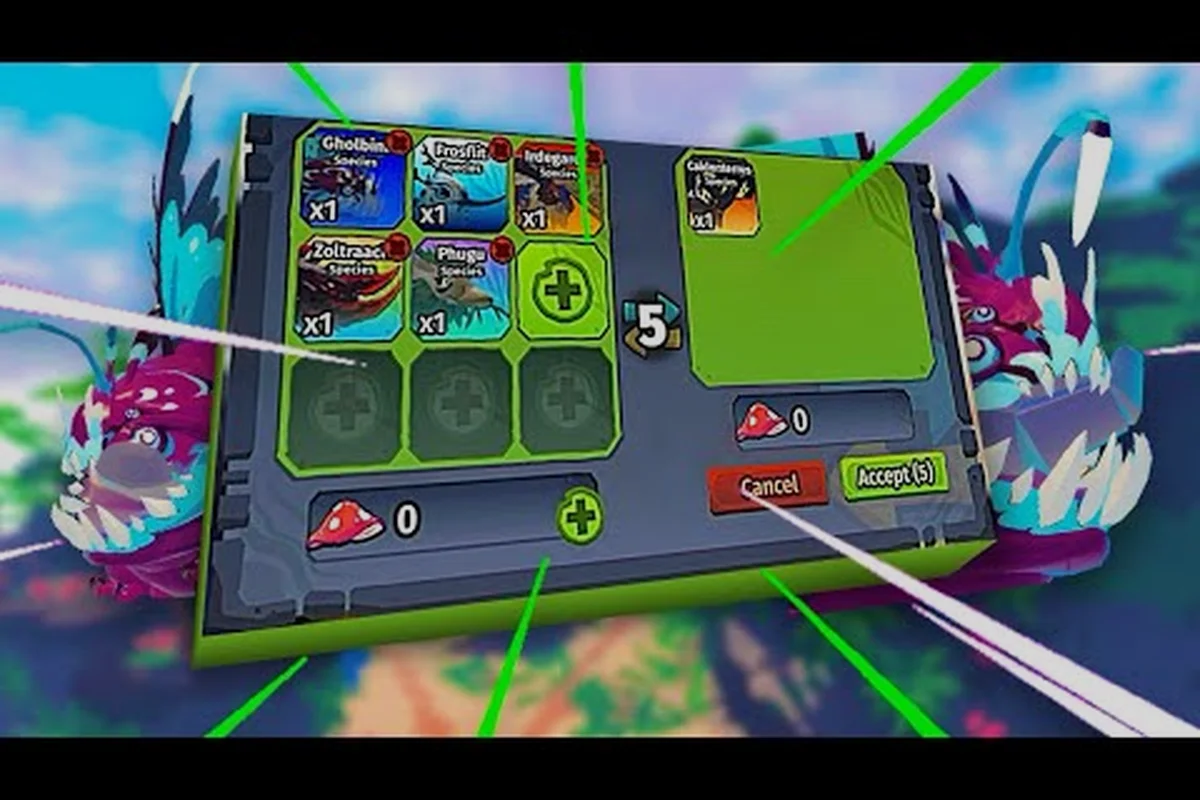
In the Creatures of Sonaria economy, a female slot refers to an empty mutation or trait socket on a female-bodied creature offered for trade. Mastering creatures of sonaria female slot trading requires understanding how body rarity, socket types, and species tiers combine to create separate price premiums across the Trade Realm.
What Makes Female Slots a Separate Trading Category
In the Creatures of Sonaria economy, a "female slot" refers to an empty mutation or trait socket carried by a female-bodied creature that the seller offers for separate trade. Rather than swapping the entire creature, players negotiate just the slot itself, usually in exchange for a creature on a win-trade basis plus a cash add-on. The category exists because female slots are statistically rarer in the active population, and the socket value compounds when paired with a high-tier body or with multiple open sockets on the same creature.
A female slot is not the same as a "female creature." Traders are buying the right to mutate or nest a desirable body without committing to a full creature swap, which preserves their inventory on both sides of the trade. That mechanic is the reason creatures of sonaria female slot trading has grown into its own sub-market rather than a footnote inside the broader value list.
Three things drive female slot price premiums in the Creatures of Sonaria market, and each one stacks on top of the others rather than trading off. Scarcity comes first: female-bodied creatures sit at roughly a third of each species' live population, so any empty socket attached to one is already rarer before its type is even priced in. Demand layers second, because glimmer, shadow, and double trait slots each open different downstream value curves for nesting, skinning, or stat-shifting mutations. Finally, the host body itself adds a tier multiplier — a shadow socket on a tier 5 or discontinued species line can double the slot's price compared to the same socket on a common tier 2 body, which is why the same "empty socket" can be worth 200 Robux on one creature and 20,000 on another.
-
Body type rarity — female bodies appear at roughly 30–35% of each species' live population according to community surveys, so a single empty slot on a female body already trades at a markup before its socket type is even considered.
-
Slot type — glimmer, shadow, and double trait slots each carry their own value curve. Glimmer is a cosmetic skin slot, shadow is a stat-shifting mutation slot, and a double trait slot opens two mutation sockets on one creature, which compounds buyer interest.
-
Species tier and discontinuation status — tier 5 species sit at the top of the rarity stack, and any creature that is no longer obtainable (a "discontinued" line) carries a permanent scarcity premium that pushes slot pricing further.
Slot pricing in the female category also reflects nesting math. If a slot can hold a shadow mutation, the buyer factors in nesting odds, token cost, and the shadow stat curve before deciding on a price. A close look at creatures of sonaria mutation trading demand shows how socket types feed back into value even when the underlying species is mid-tier.
Glimmer, Shadow, and Double Trait Slot Price Tiers
The three socket types that dominate female slot trade windows are glimmer, shadow, and double trait, and each behaves like a different commodity. Glimmer slots are mostly cosmetic, so their value tracks skin rarity and event timing. Shadow slots shift stats, which means their pricing depends on the stat boosts the buyer expects. Double trait slots open two mutation sockets on a single creature, so they attract breeding-focused players willing to pay a 2× to 3× premium over single slots.
| Slot Type | What It Holds | Typical Price Floor (community) | Price Ceiling (community) | Main Value Driver |
|---|---|---|---|---|
| Glimmer (single) | Cosmetic skin | Low | Mid | Event window + body tier |
| Shadow (single) | Stat mutation | Mid | High | Stat boost tier + body tier |
| Double trait | Two mutation sockets | High | Very high | Stacking potential on tier 5 |
| Hybrid (glimmer + shadow) | One of each on same creature | Mid-high | Very high | Stacking on discontinued body |
The table reflects numbers collected from Discord trade logs, the Traderie price guide, and Reddit megathreads. Real prices fluctuate by event cycle, but the shape of the curve is stable: glimmer slots anchor the bottom, shadow slots occupy the middle, and double trait slots pull the ceiling.
Glimmer Slot Behavior
Glimmer slots ride the event calendar. When a holiday event drops a limited skin set, demand for empty glimmer sockets spikes because players want to roll the new palette onto existing creatures. Outside of events, glimmer prices settle into a quieter band. The creatures of sonaria glimmer slot value curve therefore has two phases: an event peak that can push prices 40–60% above baseline, and a post-event cooldown that returns to normal within 2–3 weeks.
What the glimmer market really prices is optionality. Buyers pay for the chance to apply a future limited skin without paying event costs twice. Sellers price accordingly, asking for slightly more than the slot's cosmetic-only value when an event is in its first week.
Shadow Slot Behavior
Shadow slots behave like stat futures. A shadow socket that will eventually host a top-tier shadow mutation trades higher than one that will likely hold a weak roll, because the stat ceiling matters more than the average outcome. Creatures of sonaria shadow slot value trends upward whenever the community discovers a strong shadow line for a popular species, and it dips when a long-standing meta breaks.
Shadow slots should be priced against the expected mutation outcome, not the rolling mean, because two sockets with identical average rolls can carry wildly different ceiling values once the creature's species, generation count, and current meta shift in or out. A tier 5 species socketed for a confirmed shadow offspring of a discontinued creature line — the kind a female slot trading market will reprice overnight — can trade at 3x to 5x the asking price of a same-mutation socket on a common species, and buyers who internalize the nesting table capture that delta. Traders who only watch average roll history end up anchoring to the floor; traders who read ceiling-weighted projections set the bid.
Double Trait Slot Behavior
Double trait slots combine two mutation sockets on one creature, and they unlock stacking builds that single slots cannot. A tier 5 species with a double trait slot can hold two complementary mutations, which is why demand for double trait slots outstrips supply in nearly every public trade channel. The creatures of sonaria double trait slot value index is the single most volatile number in the female slot market, with prices swinging 2× to 3× during update windows.
| Trait Setup on Slot | Stacking Power | Demand Level | Notes |
|---|---|---|---|
| Two offensive mutations | High | Very high | PVE and boss-meta builds |
| Two defensive mutations | Mid | Mid | Niche PvP builds |
| One offensive + one utility | High | High | Most flexible setup |
| Two cosmetic-leaning traits | Low | Low | Fasion-trade only |
Stacking power is what moves the price, not the slot count itself, and that's why two offensive mutations on a tier 5 species can clear 15k while two cosmetic-leaning traits stall under 3k in the same channel. Collectors grade these slots like mint versus played cards: a double trait slot with both mutators near their stacking ceiling gets a 2.5× to 4× premium over a single-trait alternative, especially during update windows when tier 5 species trade demand spikes for builds feeding the creatures of sonaria glimmer slot value and creators of sonaria shadow slot value brackets.
Tier 5 Species Demand and How It Moves Slot Prices
Tier 5 species sit at the top of the rarity tier list, and slot prices on those bodies move on a different curve from tier 3 or tier 4 equivalents. Creatures of sonaria tier 5 species trade demand spikes whenever a new tier 5 enters the rotation, when a tier 5 returns from a long hiatus, or when a developer post hints at an upcoming nest event that will increase mutation attempts on that species.
When demand for a tier 5 body rises, the female slot premium attached to that body rises with it. A glimmer slot on a tier 5 female can trade for 1.5× to 2× the price of the same socket on a tier 4 body, and a double trait slot on a tier 5 female can reach 3× the tier 4 equivalent. The compounding is real because each layer of scarcity stacks on the next.
The trading windows that produce the cleanest price discovery on tier 5 female slots are narrow, high-volume bursts where buyer urgency and seller inventory overlap — specifically event-week windows, post-patch windows, and returning-species windows. Outside these windows, creatures of sonaria female slot trading thins out and ask/bid spreads widen, which means a glimmer slot on a tier 5 body that clears in 4 hours during a returning-species event might sit unsold for 3+ days in the off-week, distorting any "market price" you record. For the most reliable read on creatures of sonaria shadow slot value and creatures of sonaria double trait slot value, anchor your data points to trades logged inside one of those three windows rather than averaging across the full cycle.
-
Event-week windows — when a developer event forces mutation attempts, slot prices on the relevant species rise for 1–2 weeks and then settle.
-
Post-patch windows — after a balance patch, the meta shifts and slot demand follows. Buyers hunt for slots on the new top-tier bodies while sellers reprice their inventory.
-
Returning species windows — when a discontinued line returns for a limited window, slot prices on that body spike and then crash once the window closes.
A practical example helps: a shadow slot on a tier 5 female body listed during a returning-species window has historically traded at 2–3× the same slot's pre-event price, while a glimmer slot on a tier 3 body during the same window barely moves. The asymmetry comes from buyer urgency, not from slot mechanics.
| Tier | Female Slot Premium vs. Male Counterpart | Price Sensitivity to Events | Typical Buyer Profile |
|---|---|---|---|
| Tier 2 | 1.1× – 1.3× | Low | Casual collectors |
| Tier 3 | 1.2× – 1.5× | Mid | Mid-game players |
| Tier 4 | 1.4× – 1.8× | High | Active traders |
| Tier 5 | 1.8× – 2.5× | Very high | Veteran traders, hoarders |
The premium column in the table reflects a real scarcity gap, not a fashion tax. Female tier 5 bodies sit lower in nest spawn rolls, mutate successfully less often than male tier 5 equivalents, and the slot attached to one carries that same scarcity into the trade — which is exactly why a creatures of sonaria glimmer slot value or creatures of sonaria shadow slot value on a tier 5 female clears at 1.8×–2.5× the male counterpart, while a tier 2 female slot barely breaks 1.3×.
Discontinued Creature Slots and Long-Term Value
Discontinued creature values behave less like a market and more like a reserve currency. When a creature line goes discontinued, its population freezes: no new copies are minted, and every existing copy (and every slot on those copies) becomes a closed-supply asset. The creatures of sonaria discontinued creature values index has historically appreciated year over year, with the strongest gains on tier 5 and event species that were discontinued within 12 months of their debut.
Female slots on discontinued creatures follow the same rule but with an extra multiplier. The scarcity is layered: the body is rare, the female variant is rarer, and the slot is rarer still. A discontinued tier 5 female with a double trait slot can trade for multiples of any active tier 5 equivalent.
The trading patterns around discontinued creatures also differ from active species. Negotiations are slower, trust checks are stricter, and add-on cash tends to be larger because both sides want to be sure the asset is what the listing claims. According to community reports, the most common scam around discontinued female slots is a misrepresented body tier (a tier 4 sold as a tier 5), so experienced traders rely on badge counts, lineage screenshots, and Traderie verification before closing.
| Discontinued Status | Female Slot Premium vs. Active Equivalent | Buyer Pool | Liquidity |
|---|---|---|---|
| Recently discontinued (<6 months) | 2× – 3× | Veterans, hoarders | Mid |
| Long-discontinued (6–18 months) | 3× – 5× | Collectors | Low |
| Legacy (18+ months) | 5×+ | Specialty traders | Very low |
Liquidity is the real risk in this segment. Sellers can list at a premium, but finding a buyer at that premium can take weeks. The expected value of a discontinued slot is high, but the time cost is real, and traders should plan for it. A useful cross-reference is creatures of sonaria legacy creature trading, which covers the holding and exit strategy side of the same asset class.
Reading the Trade Window: A Practical Slot Pricing Workflow
Pricing a female slot is not guesswork, but it does require a workflow. The cleanest approach is to combine three inputs: socket type, body tier, and discontinuation status. Each input is a multiplier, and the final price is the product of the base value, the socket multiplier, and the body multiplier.
The four steps below are the workflow most active traders run on public Discord and Traderie channels whenever a glimmer, shadow, or double trait female slot is on the table. In practice, sellers and buyers skip individual steps at their peril: a Tier 5 event-locked body with a shadow slot can swing several times in price depending on whether the current patch changed the species' mutation ceiling or reintroduced it into the active rotation, so repeating the workflow each listing keeps a trader from anchoring to a stale Traderie median from two balance passes ago.
-
Identify the slot type. Is the listing a glimmer, shadow, or double trait socket? Confirm by asking for a screenshot of the slot in the creature's stat panel. A shadow slot is recognizable by its dark socket icon, and a double trait slot shows two adjacent empty sockets.
-
Confirm the body tier and species. Tier 5 species carry the highest multiplier. If the species is also event-locked or recently discontinued, add a second multiplier. The community tier list, refreshed each patch, is the usual reference.
-
Read the current market temperature. Check Traderie's price guide, the active Reddit megathread, and two or three Discord trade channels. Average the last 5–10 completed trades for the same slot type on a similar body. If the spread is wide, use the median rather than the mean.
-
Apply add-ons and win-trade math. Most female slot trades close on a win-trade basis with a cash leg. Decide whether the slot alone justifies the trade, or whether a side creature is required to balance the swap. The cash leg typically sits at 20–40% of the total trade value.
A second pass is worth doing before finalizing. Cross-check the species against the creatures of sonaria how to get shadow mutation reference, because the shadow mutation route and its stat ceiling are part of what the buyer is pricing into the slot. If the seller is pricing as if the slot will host a top-tier shadow, but the species' shadow line is weak, the trade is overpriced on the sell side.
Common Slot Pricing Errors
Three pricing errors come up often enough in female slot trading to be worth flagging, and they all share one root cause: a slot's final value is the product of every multiplier in the chain (slot type, tier, double trait, body gender, and discontinuation), so skipping or misapplying any single layer cascades into a mispriced listing that sits unsold for weeks.
-
Pricing glimmer slots as if they were shadow slots. Glimmer is cosmetic, and its ceiling is lower than shadow even on a tier 5 body. Mixing the two inflates the asking price and lengthens the listing window.
-
Ignoring the discontinuation curve. Sellers sometimes list a discontinued slot at the active equivalent's price because they have not checked the legacy multiplier. Buyers will not match that price, and the listing will sit.
-
Forgetting the female body premium. Some traders price a female slot identically to a male slot. The 1.2×–2.5× body premium is real, and a flat price against the male counterpart undersells the female.
When in doubt, take the listed slot and break it back into its five base components — slot type (glimmer or shadow), tier, double trait flag, body gender (applying the 1.2×–2.5× female premium), and discontinuation status — then recompute the product step by step on paper before accepting a trade offer; this back-solving habit catches the exact layer where a seller's listing is inflated, and it gives you a concrete counteroffer number tied to the legacy multiplier curve rather than a guess.
Frequently Asked Questions
What is a female slot in Creatures of Sonaria trading?
A female slot is an empty mutation or trait socket on a female-bodied creature that the seller offers as a standalone trade item. Buyers usually acquire the slot on a win-trade basis plus a cash add-on, rather than swapping the entire creature, which is the core mechanic behind creatures of sonaria female slot trading. The female body premium reflects the species' roughly 30–35% female share in the live population.
How is glimmer slot value different from shadow slot value?
Glimmer slots hold cosmetic skins and ride the event calendar, so their price peaks 40–60% above baseline during event weeks and settles within 2–3 weeks afterward. Shadow slots hold stat mutations and trade closer to the expected stat ceiling of the future mutation, which is why creatures of sonaria shadow slot value tends to be steadier and higher than glimmer on the same body. The two slots behave like different commodities, and they should be priced separately.
Why are double trait slots the most expensive female slot type?
Double trait slots open two mutation sockets on one creature, which lets the buyer stack complementary mutations on a tier 5 body. That stacking potential is what drives creatures of sonaria double trait slot value into the top price band. Demand for double trait slots outstrips supply in nearly every public trade channel, and the premium compounds when the body is also tier 5 or recently discontinued.
How do discontinued creatures affect female slot pricing?
Discontinued lines freeze the population, so every existing female body and every slot on it becomes a closed-supply asset. Creatures of sonaria discontinued creature values typically appreciate over time, and female slot premiums on those bodies sit at 2× to 5× the active equivalent depending on how long the line has been retired. Liquidity is the main trade-off, so sellers should plan for longer listing windows.
Where can I check current female slot prices?
Traderie's Sonaria price guide, the active Reddit megathread, and the largest Discord trade channels are the three most reliable sources. The creatures of sonaria badge reward creature values reference is also useful because badge-locked creatures trade at premiums similar to short-term discontinued lines, which makes their slot pricing a useful proxy when no direct slot data is available.